About Us
An Economy of Permanence
We build small, working things and keep them running.
The Name
Why we are named after J. C. Kumarappa
Joseph Cornelius Kumarappa was an economist who asked a question most economists avoid: how long can this last?
In 1945 he published Economy of Permanence. His argument: nature runs on cycles that renew — nothing is extracted that is not returned. Human economies do the opposite, and call it growth.
Cycles that renew
nothing taken that isn’t returned
What they call growth
- Extract
- Produce
- Discard
His question
How long can this last?
His answer
Build it the other way round.

Photo: portrait / archival image — J. C. Kumarappa
We took his test. Every unit answers three questions before it opens:
Does it earn?
A unit that cannot pay for itself is a project, not an institution.
Does it employ?
Work must stay in the village it came from.
Does it teach?
If the skill leaves with us, we have built nothing.
Fail one, it doesn’t open.

Timeline
How it grew
2022
The park begins
JCK Technology Park and Innovation Center is established at Paralakhemundi. The first units are craft and clay: the S K Mirmira Memorial Clay Studio, taught by Appanna Garu, a village potter.
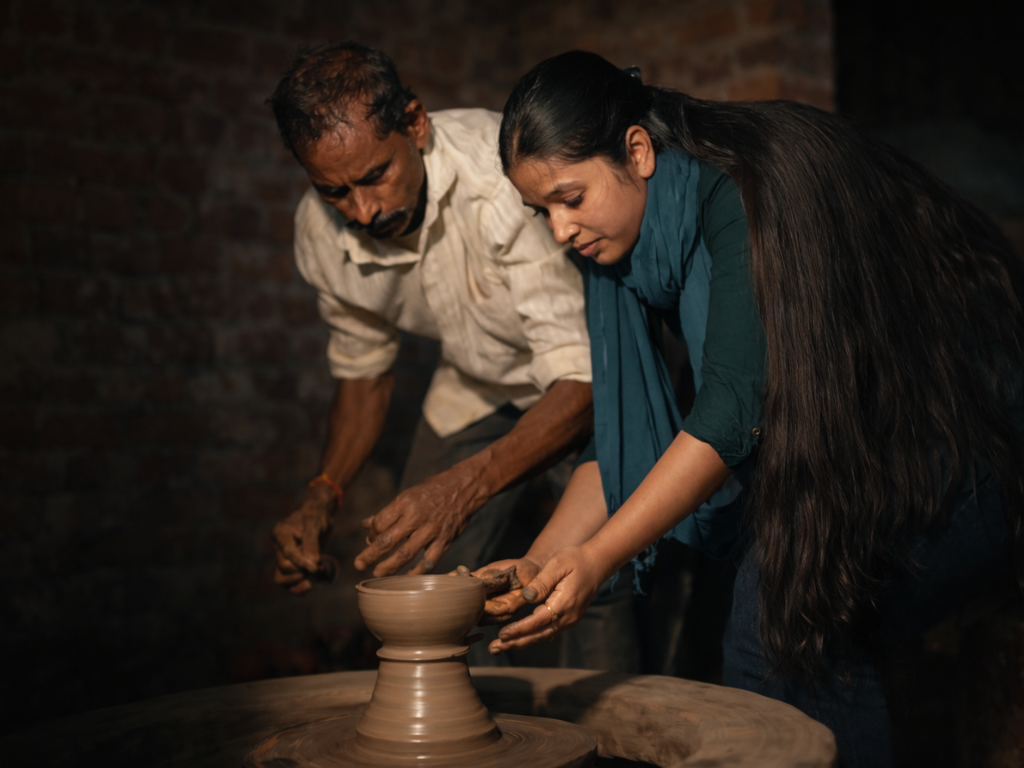
First clay studio, 2022 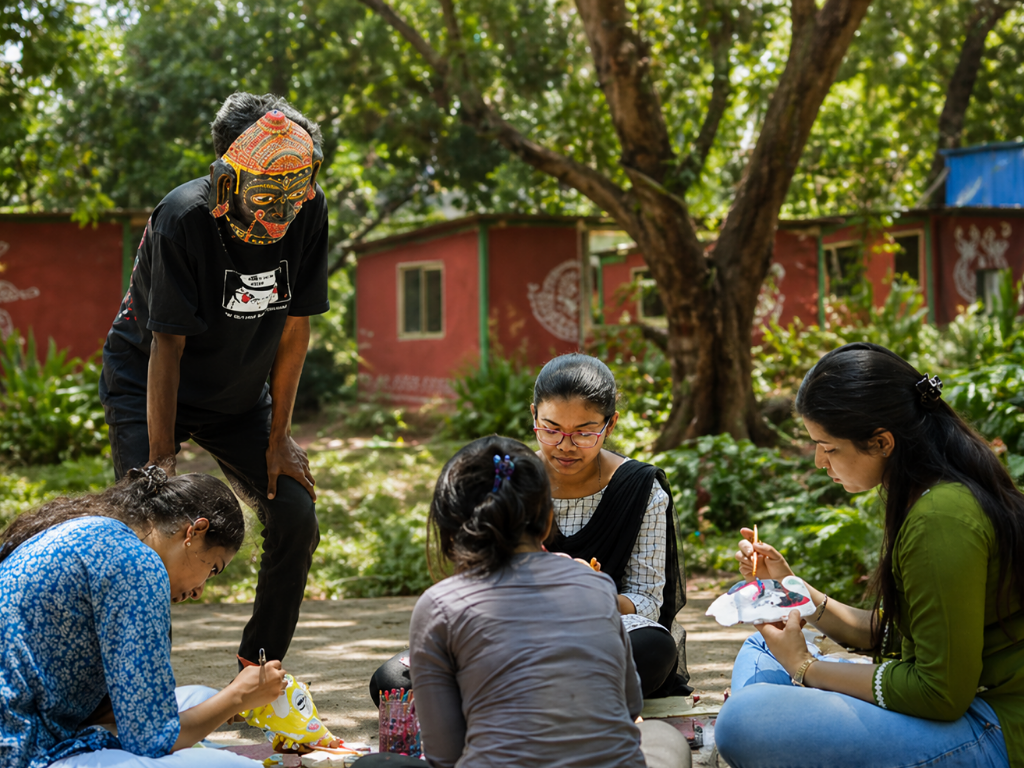
LLP registration, 2023 2023
Registration
Registered as a Limited Liability Partnership on 21 November 2023, incubated with Centurion University of Technology and Management. Twelve units are named, each after a person whose work we are continuing.
2023
The first Bodh Kendra
On 23 July, the first Bodh Kendra opens at Centurion University with 129 students. Bodh Kendra is MAGICTERRAIN FOUNDATION's live learning lab; the park gives it a home, workshops and teachers. Five now run.
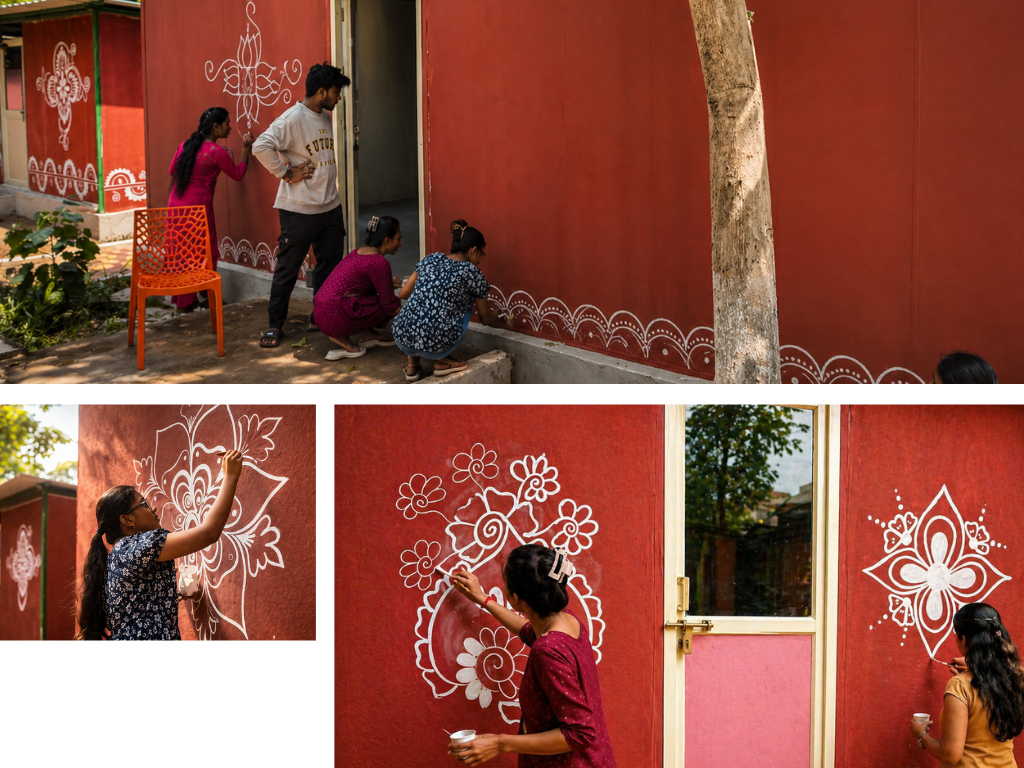
Bodh Kendra opening, 2023 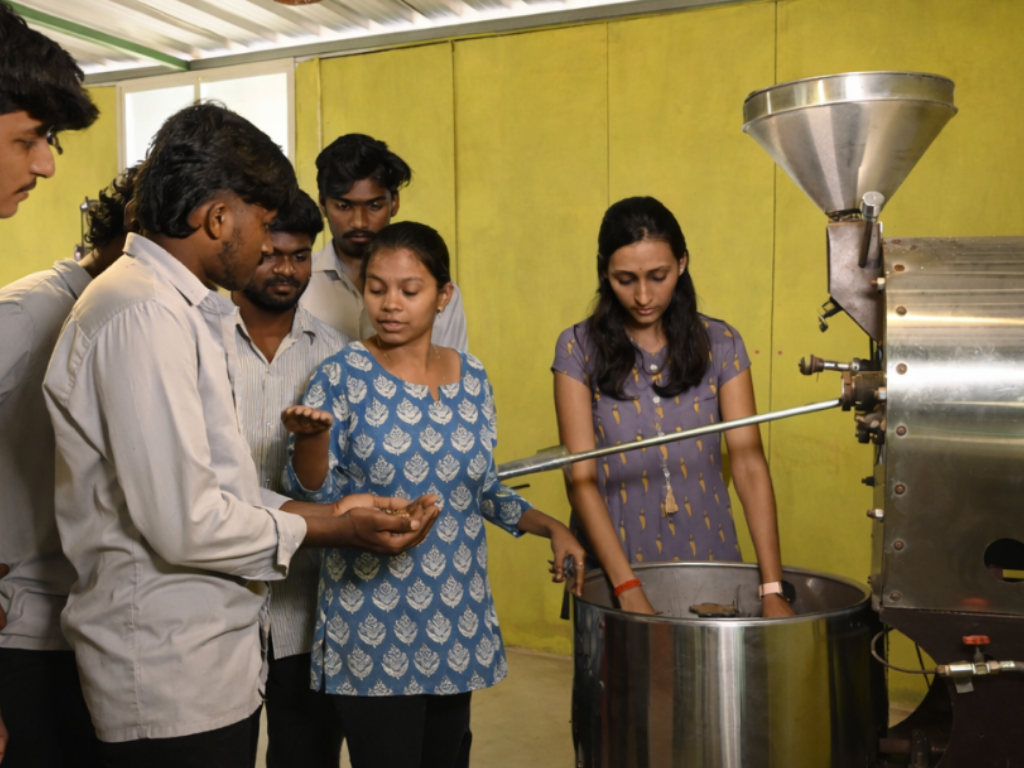
Araku coffee sourcing, 2024 2024
Coffee
Centurion Coffee Connect begins sourcing organic coffee from the Araku valley, direct from tribal growers. A Brew of Sustainability — Connecting the Tribes of Araku. The roastery follows: green bean in, roasted and ground coffee out, all of it handled on campus.
2024
Café Terrain, Odisha
The first café opens at Paralakhemundi — the retail end of the coffee line, and the place where students in the coffee-processing course learn service, costing and stock.
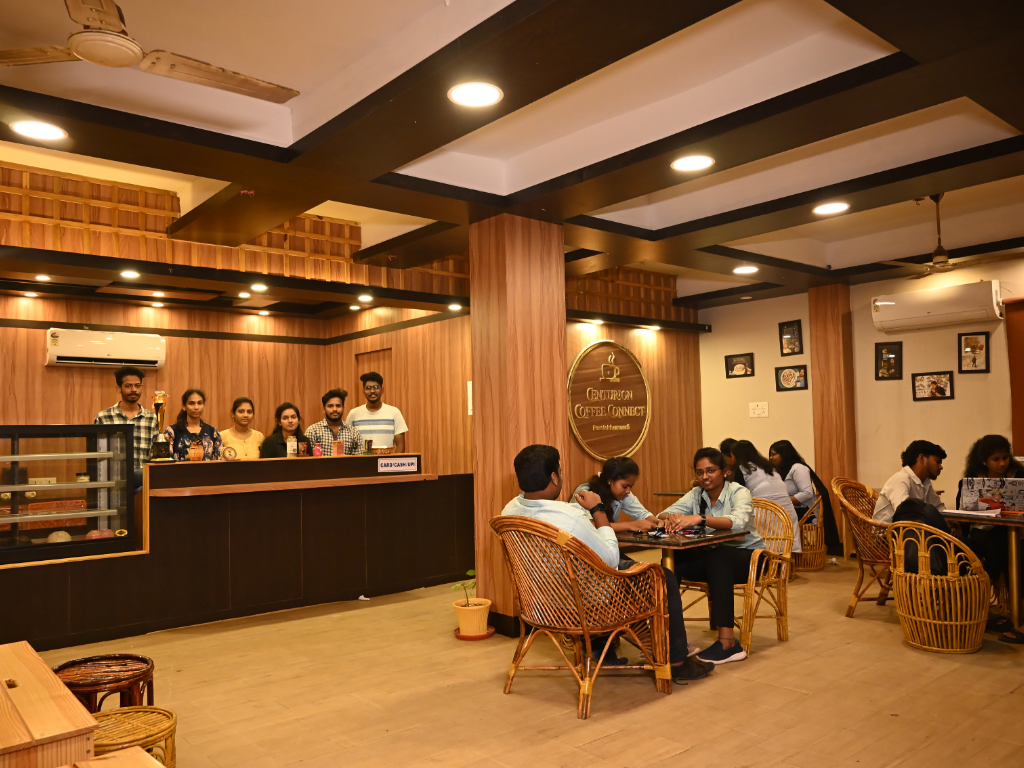
Café Terrain, Odisha, 2024 
Café Terrain, Dooars, 2025 2025
Café Terrain, Dooars
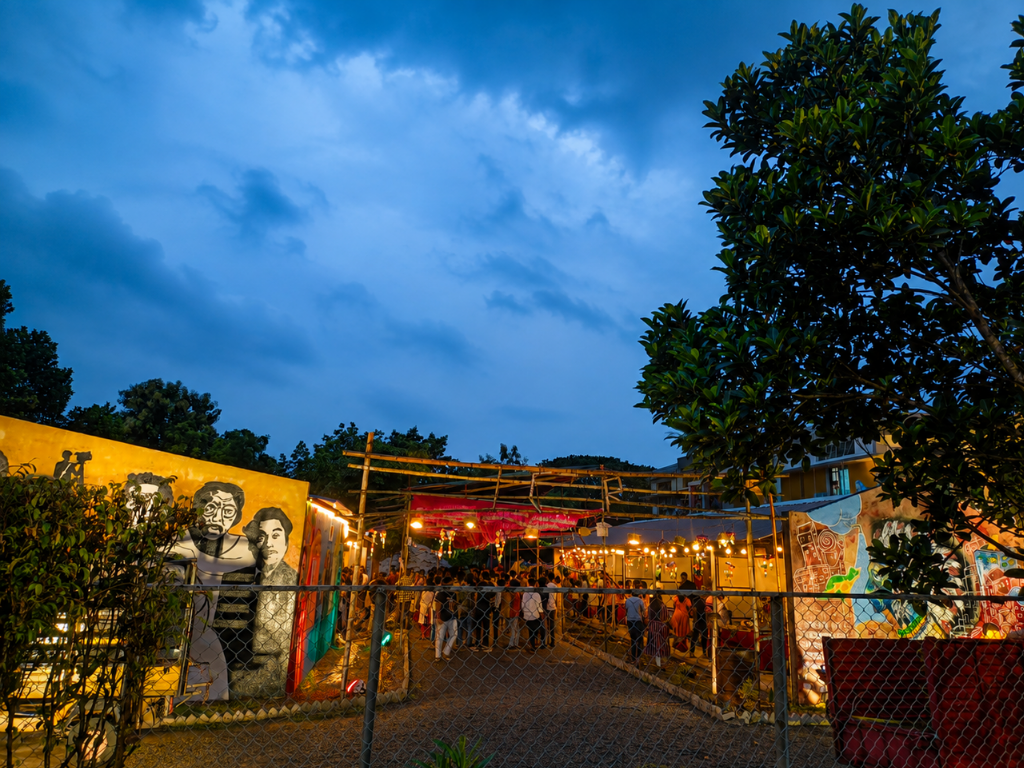
A second café opens at Kali Bari, Alipurduar, West Bengal. Same coffee, different geography: an outlet in a district where jobs left with the tea gardens.
2025
Terrain Vanabas
A five-room community homestay at Panijhora forest village, on the edge of Buxa Tiger Reserve. One acre, a nutrition garden, an art and craft room. It hosts nature camps, agro-ecology camps, craft camps, forest village trails and nature-journal workshops — run with MAGICTERRAIN FOUNDATION. Tourism that pays a forest village to stay a forest village.
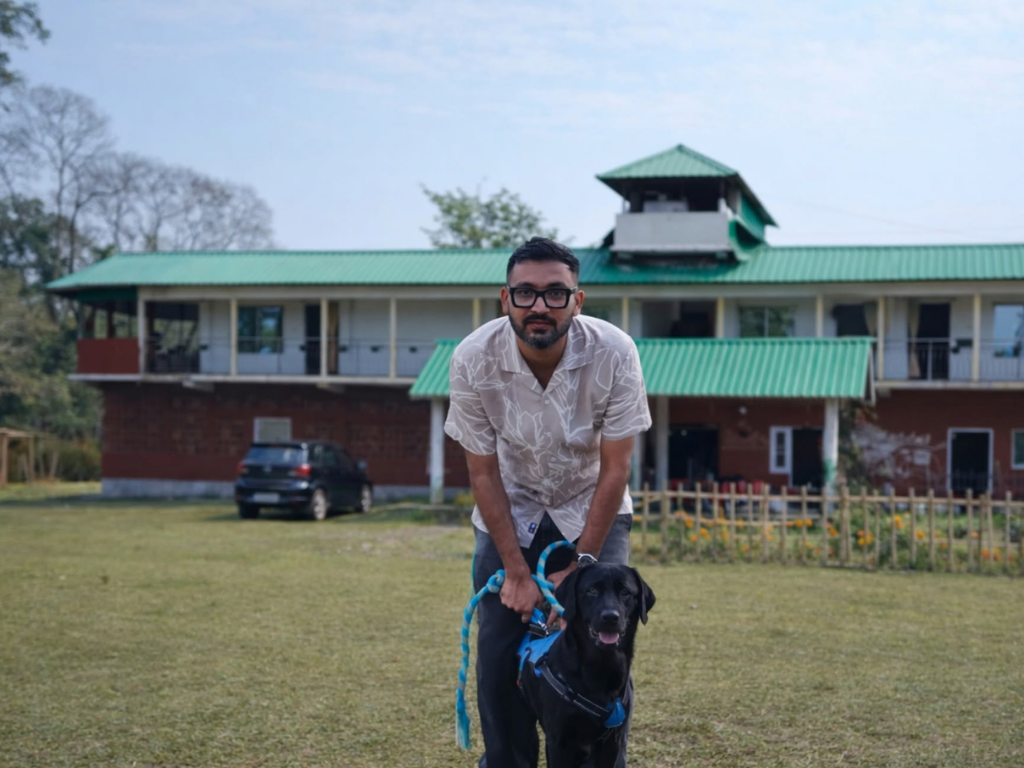
Terrain Vanabas, 2025 
Campus today, 2026 2026
Where we are now
Twelve units. Two states. 2,000+ farmers reached by the mobile training centre. 480 rural youth in culinary training. 135 potters, 35 coffee processors, 7,500+ pages off the student-run press.
What We Are
A technology park, run like a village
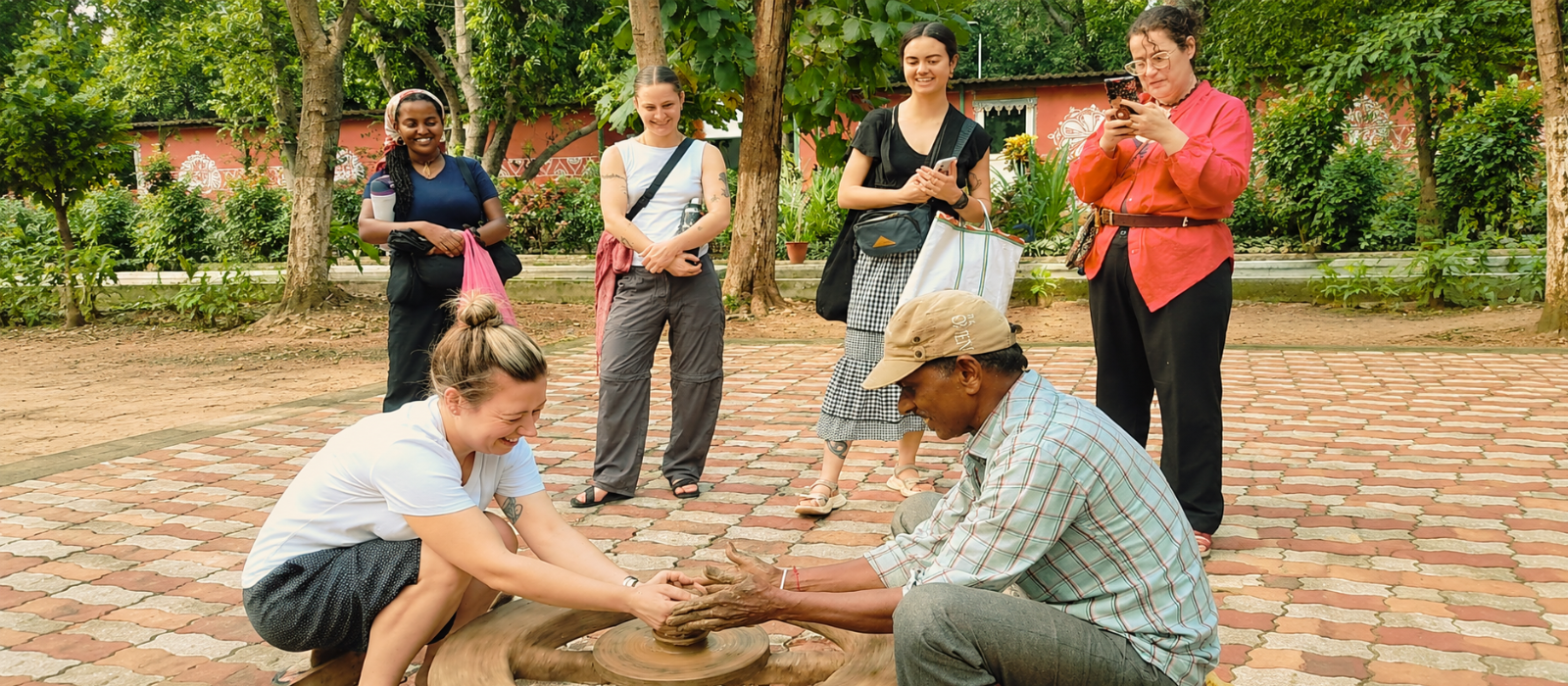
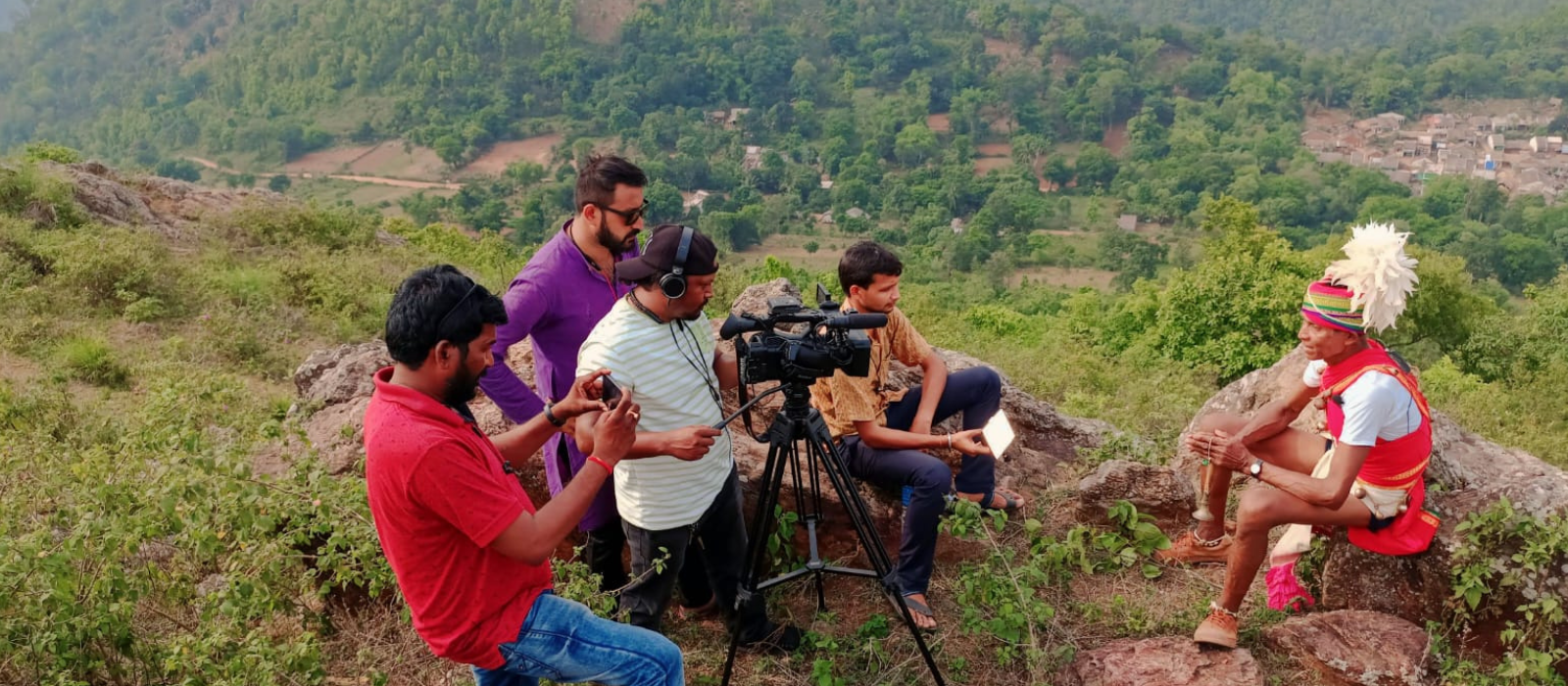

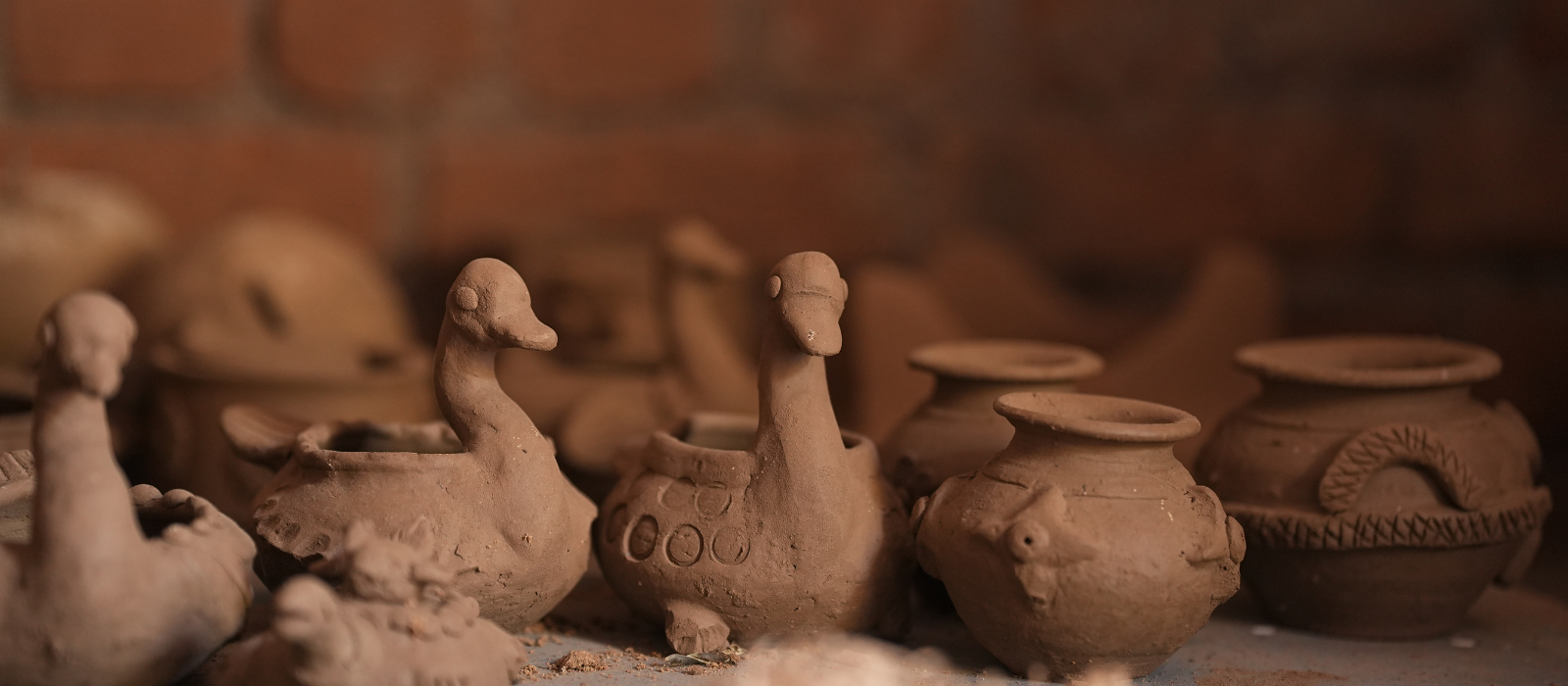
 Inside the park01/05
A living classroom
Small units. Shared knowledge. Real work.
Social Enterprise
JCK Technology Park & Innovation Center LLP
We build and operate our own units
- 01Design & Print Studio
- 02Film Practice
- 03ISBN Imprint
- 04Coffee Company
- 05Roastery
- 06Cafés
- 07Forest Homestay
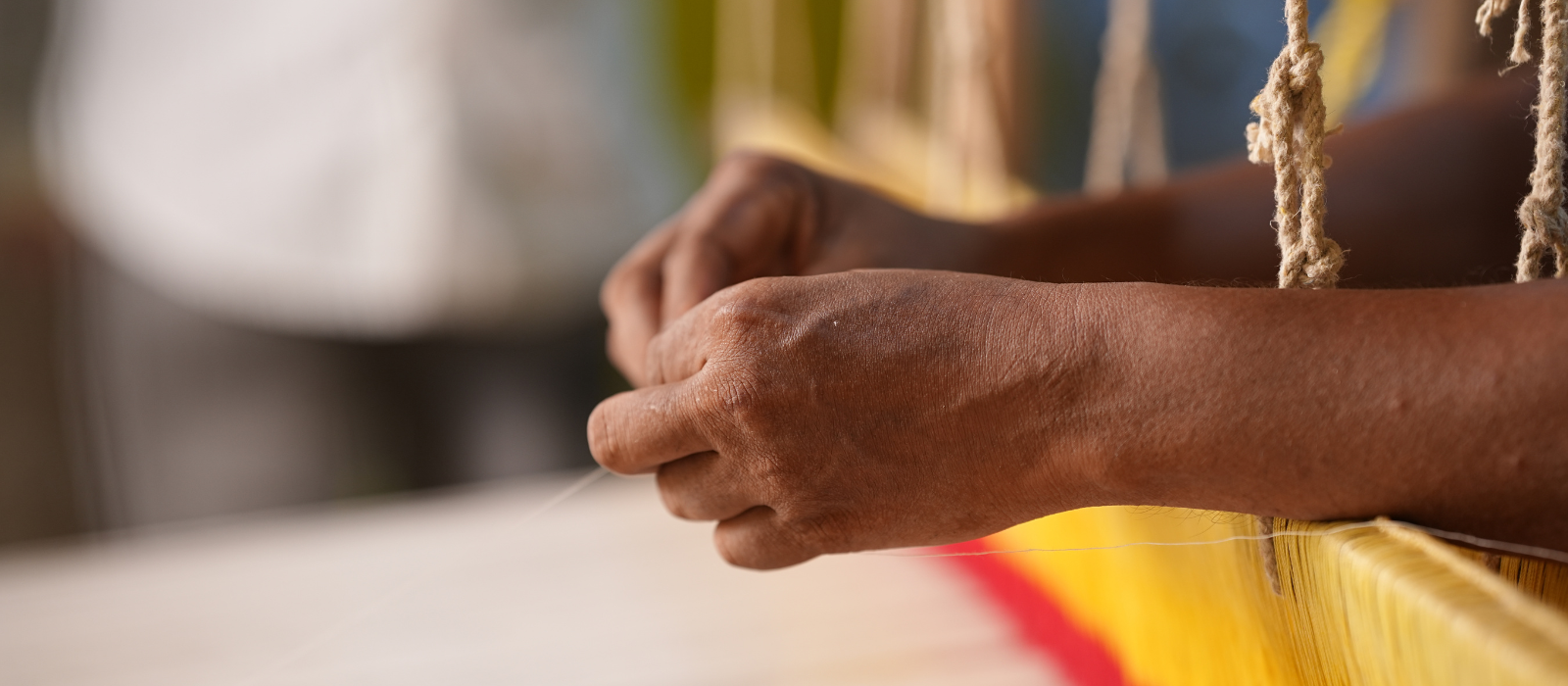
- 08Craft Studios
- 09Textile Studios
- 10Bee House
- 11Library
Each one is a small business. Each one is also a classroom.
Paralakhemundi
Gajapati district, Odisha
Incubated with Centurion University
Alipurduar
Dooars, West Bengal
Where the tea gardens closed and the work went with them
Between the two, twelve named units and a handful of operating businesses. Some are five years old. Some opened this year.
How We Work
Three rules
01
Small and many, not large and few.
Twelve small units fail better than one big one. When a unit stops working we close it and keep the rest.
02
Teach at the counter, not in the classroom.
A student learns costing by running the till, not by hearing about it. Every business we run is staffed by people learning to run it.
03
Hand it over.
The point is not to own these units in thirty years. It is for the village to own them.
The Namesakes
The people we named things after
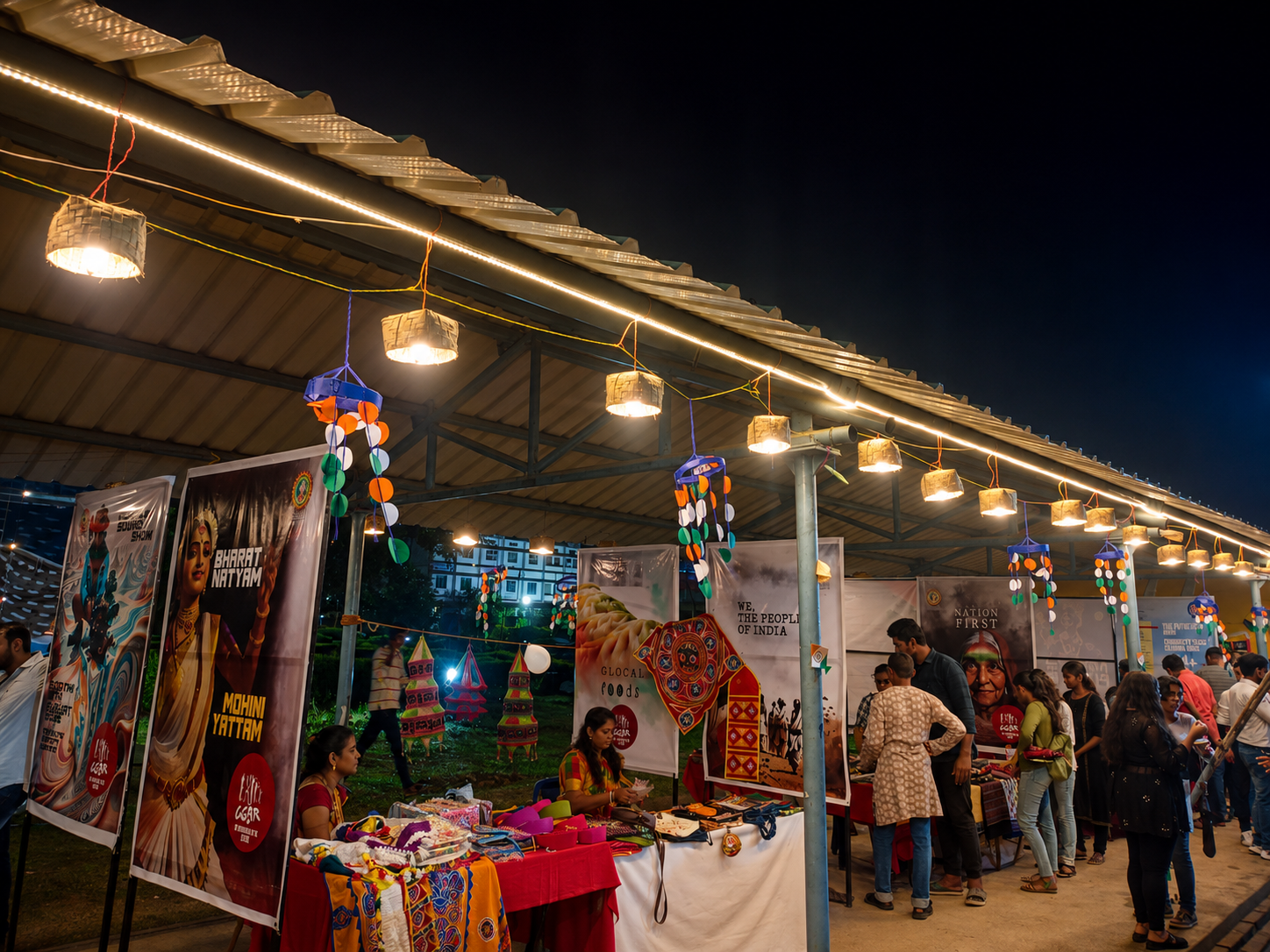
Our units carry the names of people whose work we are trying to continue.
S K Mirmira
Pottery
Acharya Nandalal Bose
Craft
S R Ranganathan
The library
Pandit Ravishankar
Indigenous music
Verrier Elwin
Social studies
Mahatma Gandhi
Gram swaraj
Amarendra Ghatge
Bees and wax
Gangadhar Meher
Textile
Kamala Pujari
Seeds and sustainable agriculture
V G Siddhartha
Coffee
Rabindranath Tagore
The peace yard
Stockholm Papyrus
Natural dye